Janet J Nd Itã¢â‚¬â„¢s Time to Free Speech on Campus Again
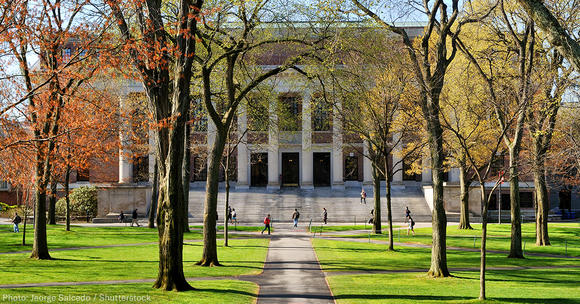
The First Amendment to the Constitution protects speech no matter how offensive its content. Restrictions on speech by public colleges and universities amount to regime censorship, in violation of the Constitution. Such restrictions deprive students of their right to invite spoken language they wish to hear, contend spoken language with which they disagree, and protestation oral communication they find narrow-minded or offensive. An open society depends on liberal instruction, and the whole enterprise of liberal teaching is founded on the principle of free speech.
How much we value the right of costless spoken communication is put to its severest test when the speaker is someone we disagree with most. Speech that deeply offends our morality or is hostile to our fashion of life warrants the aforementioned constitutional protection as other voice communication because the correct of free speech is indivisible: When nosotros grant the regime the power to suppress controversial ideas, nosotros are all field of study to censorship by the state. Since its founding in 1920, the ACLU has fought for the free expression of all ideas, popular or unpopular. Where racist, misogynist, homophobic, and transphobic speech is concerned, the ACLU believes that more oral communication — non less — is the answer most consistent with our constitutional values.
But the right to gratuitous speech communication is not just almost the law; it'due south also a vital part of our civic education. Every bit Supreme Court Justice Robert Jackson wrote in 1943 virtually the role of schools in our order: "That they are educating the young for citizenship is reason for scrupulous protection of Ramble freedoms of the private, if we are not to strangle the costless mind at its source and teach youth to disbelieve important principles of our government as mere platitudes." Remarkably, Justice Jackson was referring to grade school students. Inculcating constitutional values — in particular, the value of free expression — should be nothing less than a core mission of whatsoever higher or university.
To exist clear, the First Amendment does non protect behavior on campus that crosses the line into targeted harassment or threats, or that creates a pervasively hostile environment for vulnerable students. But merely offensive or narrow-minded spoken communication does non rising to that level, and determining when conduct crosses that line is a legal question that requires examination on a instance-by-case basis. Restricting such speech may be attractive to college administrators as a quick ready to address campus tensions. Just real social change comes from hard piece of work to address the underlying causes of inequality and bigotry, not from purified discourse. The ACLU believes that instead of symbolic gestures to silence ugly viewpoints, colleges and universities have to step up their efforts to recruit various faculty, students, and administrators; increase resource for student counseling; and heighten sensation well-nigh bigotry and its history.
QUESTIONS
Q: The First Amendment prevents the government from arresting people for what they say, but who says the Constitution guarantees speakers a platform on campus?
A:The First Amendment does non require the authorities to provide a platform to anyone, but it does prohibit the authorities from discriminating against speech communication on the basis of the speaker'due south viewpoint. For example, public colleges and universities have no obligation to fund student publications; however, the Supreme Court has held that if a public university voluntarily provides these funds, it cannot selectively withhold them from particular pupil publications simply because they advocate a controversial point of view.
Of course, public colleges and universities are complimentary to invite whomever they like to speak at starting time ceremonies or other events, just as students are free to protest speakers they observe offensive. College administrators cannot, however, dictate which speakers students may invite to campus on their own initiative. If a college or university usually allows students to utilize campus resource (such every bit auditoriums) to entertain guests, the schoolhouse cannot withdraw those resources simply because students have invited a controversial speaker to campus.
Q: Does the Starting time Amendment protect speech that invites violence against members of the campus community?
A:In Brandenburg v. Ohio, the Supreme Courtroom held that the government cannot punish inflammatory voice communication unless it intentionally and effectively provokes a crowd to immediately carry out tearing and unlawful action. This is a very high bar, and for practiced reason.
The incitement standard has been used to protect all kinds of political spoken communication, including spoken language that at least tacitly endorses violence, no matter how righteous or vile the cause. For example, in NAACP 5. Clairborne Hardware, the court held that civil rights icon Charles Evans could non exist held liable for the argument, "If nosotros catch any of yous going in any of them racist stores, we're going to break your damn neck." In Hess 5. Indiana, the courtroom held that an anti-war protestor could not be arrested for telling a crowd of protestors, "Nosotros'll take the fucking street later." And In Brandenburg itself, the court held that a Ku Klux Klan leader could non be jailed for a speech communication stating "that there might have to be some revengeance [sic] taken" for the "continued suppression of the white, Caucasian race."
The First Amendment's robust protections in this context reflect two fundamentally important values. Outset, political advocacy — rhetoric meant to inspire action against unjust laws or policies — is essential to democracy. Second, people should be held accountable for their own comport, regardless of what someone else may accept said. To protect these values, the Outset Amendment allows lots of breathing room for the messy, chaotic, ad hominem, passionate, and even bigoted speech that is function and parcel of American politics. It's the toll we pay to keep bullhorns in the hands of political activists.
Q: Only isn't it true y'all can't shout burn down in a crowded theater?
People frequently associate the limits of First Amendment protection with the phrase "shouting fire in a crowded theater." But that phrase is just (slightly inaccurate) autograph for the legal concept of "incitement." (Although, if yous think at that place's a burn — even if yous're wrong — you'd better yell!) The phrase, an incomplete reference to the concept of incitement, comes from the Supreme Court'southward 1919 decision in Schenck five. United States. Charles Schenck and Elizabeth Baer were members of the Executive Committee of the Socialist Party in Philadelphia, which authorized the publication of more than 15,000 fliers urging people not to submit to the draft for the Start World War. The fliers said things like: "Practise not submit to intimidation," and "Assert your rights." As a result of their advocacy, Schenck and Baer were bedevilled for violating the Espionage Human action, which prohibits interference with war machine operations or recruitment, insubordination in the military, and back up for enemies of the United States during wartime.
Writing for the Supreme Courtroom, Justice Oliver Wendell Holmes Jr. held that Schenck'south and Baer's convictions did not violate the First Subpoena. Observing that the "well-nigh stringent protection of free oral communication would not protect a man in falsely shouting fire in a theater and causing a panic," Holmes reasoned by analogy that oral communication urging people to resist the draft posed a "clear and nowadays danger" to the United States and therefore did not deserve protection under the First Amendment. This is the problem with the line about shouting fire in a crowded theater — it tin can exist used to justify suppressing any disapproved spoken language, no matter how tenuous the illustration. Justice Holmes subsequently advocated for much more robust free speech protections, and Schenck was ultimately overruled. It is now emphatically clear that the First Amendment protects the right to urge resistance to a military typhoon, and much else.
Q: But what nigh campus safe? Doesn't the Get-go Subpoena have an exception for "fighting words" that are likely to provoke violence?
A:The Supreme Court ruled in 1942 that the Beginning Amendment does not protect "fighting words," merely this is an extremely limited exception. It applies only to intimidating spoken language directed at a specific individual in a face-to-face up confrontation that is likely to provoke a violent reaction. For instance, if a white educatee confronts a student of color on campus and starts shouting racial slurs in a ane-on-one confrontation, that student may be field of study to discipline.
Over the by 50 years, the Supreme Court hasn't found the "fighting words" doctrine applicable in any of the cases that have come up before it, because the circumstances did non run across the narrow criteria outlined in a higher place. The "fighting words" doctrine does not employ to speakers addressing a large crowd on campus, no matter how much discomfort, offense, or emotional pain their speech may cause.
In fact, the Supreme Court has made clear that the regime cannot forbid speech communication on the ground that it is likely to provoke a hostile response — this is called the rule against a "heckler's veto." Without this vital protection, government officials could use safe concerns equally a smokescreen to justify shutting down speech communication they don't like, including speech that challenges the status quo. Instead, the Commencement Subpoena requires the government to provide protection to all speakers, no matter how provocative their speech communication might be. This includes taking reasonable measures to ensure that speakers are able to safely and effectively accost their audience, free from violence or censorship. It'southward how our social club ensures that the free substitution of ideas is uninhibited, robust, and wide-open.
Q: What nearly nonverbal symbols, like swastikas and burning crosses? Are they constitutionally protected?
A: Symbols of hate are constitutionally protected if they're worn or displayed earlier a general audience in a public place — say, in a march or at a rally in a public park. The Supreme Court has ruled that the First Amendment protects symbolic expression, such as swastikas, called-for crosses, and peace signs considering information technology'due south "closely alike to 'pure speech.'" The Supreme Court has accordingly upheld the rights of students to habiliment blackness armbands in school to protest the Vietnam War, as well equally the correct to burn the American flag in public as a symbolic expression of disagreement with government policies.
But the Offset Amendment does not protect the use of nonverbal symbols to direct threaten an individual, such equally by hanging a noose over their dorm room or office door. Nor does the First Subpoena protect the use of a not-exact symbol to encroach upon or desecrate private property, such as by burning a cross on someone's lawn or spray-painting a swastika on the wall of a synagogue or dorm. In R.A.V. 5. City of St. Paul, for example, the Supreme Court struck down as unconstitutional a city ordinance that prohibited cross-burnings based solely on their symbolism. But the Court's determination makes clear that the government may prosecute cross-burners under criminal trespass and/or anti-harassment laws.
Q:Isn't in that location a departure betwixt free spoken language and dangerous conduct?
A: Yes. Spoken communication does non merit constitutional protection when it targets a particular individual for harm, such as a true threat of physical violence. And schools must accept activity to remedy behavior that interferes with a particular student'due south ability to exercise their right to participate fully in the life of the academy, such as targeted harassment.
The ACLU isn't opposed to regulations that penalize acts of violence, harassment, or threats. To the contrary, we believe that these kinds of deport can and should be proscribed. Furthermore, we recognize that the mere use of words every bit one chemical element in an act of violence, harassment, intimidation, or invasion of privacy does not immunize that human activity from penalisation.
Q: Aren't restrictions on oral communication an effective and advisable way to gainsay white supremacy, misogyny, and bigotry confronting LGBT people?
A: Historically, restrictions on speech communication have proven at best ineffective, and at worst counter-productive, in the fight against bigotry. Although drafted with the all-time intentions, these restrictions are frequently interpreted and enforced to oppose social change. Why? Because they place the power to decide whether speech is offensive and should be restrained with authority figures — the government or a college assistants — rather than with those seeking to question or dismantle existing power structures.
For example, under a spoken communication code in effect at the University of Michigan for 18 months, in that location were 20 cases in which white students charged Black students with offensive spoken language. One of the cases resulted in the penalisation of a Black student for using the term "white trash" in conversation with a white pupil. The code was struck downwardly as unconstitutional in 1989.
To take another case, public schools throughout the land have attempted to censor pro-LGBT messages because the authorities idea they were controversial, inappropriate for minors, or just wrong. Heather Gillman's school district banned her from wearing a shirt that said "I Support My Gay Cousin." The primary maintained that her T-shirt and other speech supporting LGBT equality, such as "I Support Marriage Equality," were divisive and inappropriate for impressionable students. The ACLU sued the school district and won, because the First Amendment prevents the government from making LGBT people and LGBT-related issues disappear.
These examples demonstrate that restrictions on speech don't really serve the interests of marginalized groups. The Get-go Amendment does.
Q: But don't restrictions on speech send a potent message against discrimination on campus?
A: Bigoted oral communication is symptomatic of a huge problem in our country. Our schools, colleges, and universities must prepare students to combat this trouble. That means beingness an abet: speaking out and convincing others. Confronting, hearing, and countering offensive speech is an important skill, and it should be considered a core requirement at whatever school worth its salt.
When schools shut downward speakers who espouse bigoted views, they deprive their students of the opportunity to confront those views themselves. Such incidents practice not shut down a single bad idea, nor exercise they protect students from the harsh realities of an oftentimes unjust world. Silencing a bigot accomplishes goose egg except turning them into a martyr for the principle of gratis expression. The better approach, and the i more consistent with our constitutional tradition, is to respond to ideas we hate with the ideals nosotros cherish.
Q: Why does the ACLU use its resource to defend the free oral communication rights of white supremacists, misogynists, homophobes, transphobes, and other bigots?
A: Free speech rights are indivisible. Restricting the oral communication of i group or individual jeopardizes everyone's rights considering the same laws or regulations used to silence bigots can exist used to silence yous. Conversely, laws that defend free speech for bigots can be used to defend civil rights workers, anti-war protestors, LGBT activists, and others fighting for justice. For example, in the 1949 case of Terminiello v. Urban center of Chicago, the ACLU successfully defended an ex-Cosmic priest who had delivered a racist and anti-Semitic speech. The precedent prepare in that case became the footing for the ACLU's defense force of civil rights demonstrators in the 1960s and 1970s.
Q: How does the ACLU propose to ensure equal opportunity in education?
A: Universities are obligated to create an environment that fosters tolerance and mutual respect among members of the campus customs, an environs in which all students tin practice their right to participate meaningfully in campus life without being subject field to discrimination. To accelerate these values, campus administrators should:
- speak out loudly and clearly against expressions of racist, sexist, homophobic, and transphobic speech, as well equally other instances of discrimination against marginalized individuals or groups;
- react promptly and firmly to counter acts of discriminatory harassment, intimidation, or invasion of privacy;
- create forums and workshops to raise sensation and promote dialogue on issues of race, sex activity, sexual orientation, and gender identity;
- intensify their efforts to ensure wide diversity amid the educatee body, throughout the faculty, and within the college administration;
- vigilantly defend the equal rights of all speakers and all ideas to exist heard, and promote a climate of robust and uninhibited dialogue and debate open to all views, no thing how controversial.
Source: https://www.aclu.org/other/speech-campus
0 Response to "Janet J Nd Itã¢â‚¬â„¢s Time to Free Speech on Campus Again"
Post a Comment